Tags
born again, create, Creator, epistle of James, Father God, God's grace, grace and truth, Heavenly Father, Holy Spirt, James, Jesus, new birth, prayer for guidance, true message
Day 10: A Message of New Birth
He wanted us to be his own special people,[a]
and so he sent the true message to give us new birth.
(James 1:18, CEV)
Reflection
How does God feel about you? Does He consider you a waste of His time and effort? For that matter, does God think of you at all? Today’s reading from the Epistle of James answers these questions.
He wanted us to be his own special people,[a]and so he sent the true message to give us new birth. (James 1:18, CEV)
According to this verse, you are not an afterthought in the mind of the Creator. You are special and you are wanted. How special are you? According to the original Greek, you are “the first of his creatures.” In other words, we are of first importance. And how do we know this is true?
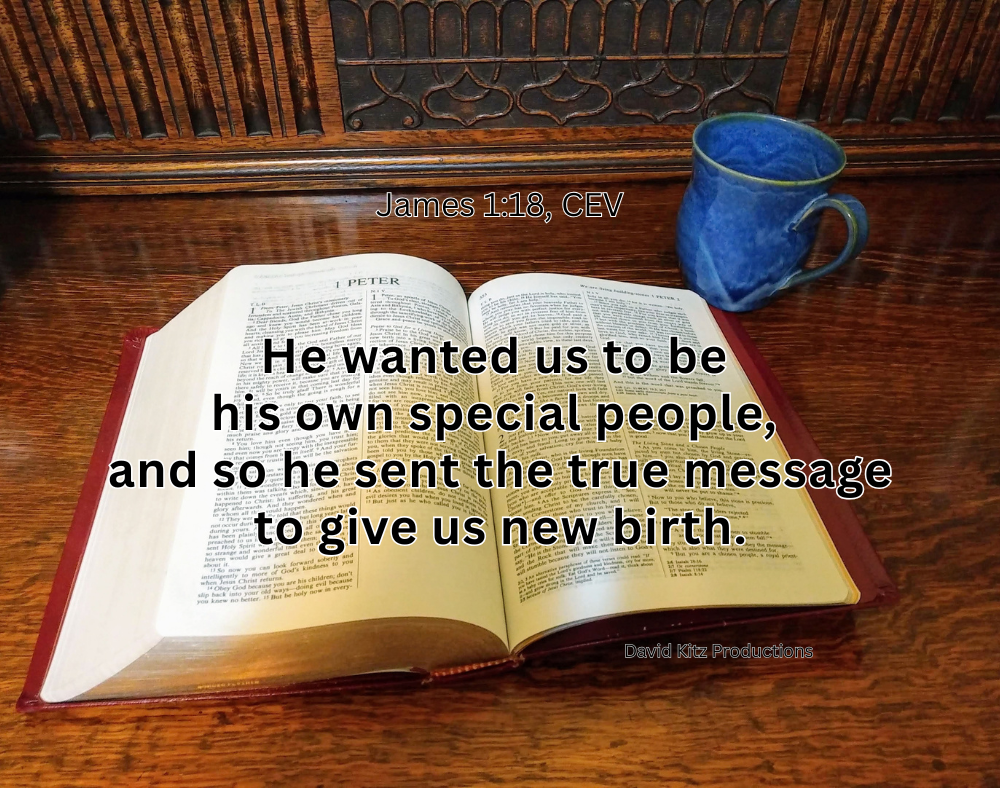
We know this is true because of the second half of verse eighteen: and so he sent the true message to give us new birth.
So who is this true message? Notice I didn’t ask, “What is this true message?”
Jesus didn’t just proclaim the message of salvation. He is the message of salvation. In his gospel, John introduces us to Jesus our Messiah with these words:
The Word became flesh and made his dwelling among us. We have seen his glory, the glory of the one and only Son, who came from the Father, full of grace and truth. (John 1:14)
And why did God send the true message? Again, we find the answer in this verse. The Father who created all the lights in the heavens (v. 17) sent the true message to give us new birth.
In his conversation with Nicodemus, Jesus stated, “Very truly I tell you, no one can see the kingdom of God unless they are born again” (John 3:3, NIV).
Please note that you and I did not initiate our own birth. My birth was initiated by my father in consort with my mother. In the same way our heavenly Father initiated our spiritual rebirth by sending Jesus—the true message to give us new birth. Peter reassures us that this is so with these words: For you have been born again, not of perishable seed, but of imperishable, through the living and enduring word of God (1 Peter 1:23, NIV).
Therefore, along with Paul we can declare, “Thanks be to God for his indescribable gift!” (2 Corinthians 9:15, NIV).
Response
Heavenly Father, I thank you for sending Jesus, the true message into my life. Jesus, I appreciate your grace and forgiveness. I am so grateful that I have been born again by your Holy Spirit. Father, I am your child. My spirit cries, “Abba, Father! You are my God.” Amen.
New from David Kitz.

To view further details or purchase click here.